Biking in Littleton
Littleton aims to provide people of all ages and abilities, and in all areas of the city, with a bicycle network that is safe, comfortable, and connected. Our goals are to provide people with healthier and more affordable travel choices that get them where they want to go.
By implementing protected infrastructure for people on bicycles, Littleton is creating safer streets for everyone by building streets with slower speeds, safer intersections, better connections to transit, and safer conditions for drivers.
Upcoming Events
Has your child been struggling to learn to ride a bike? Or have you always wanted to ride a bike and been struggling to learn and feel confident? Sign up for a FREE class with Bicycle Colorado. Their effective gliding technique has most students riding within two hours! See below for upcoming classes.
Youth Bike Classes
Saturday, August 8 from 9 AM - 11AM: Learn to Ride
Friday, September 25 from 10 AM - 12 PM: Learn to Ride (FULL)
Wednesday, October 7 (Fall Move to School Day) from 4:30 PM - 6:40 PM: Learn to Ride
Monday, October 19 from 10 AM - 12 PM: Learn to Ride
Upcoming Bicycle Network Projects
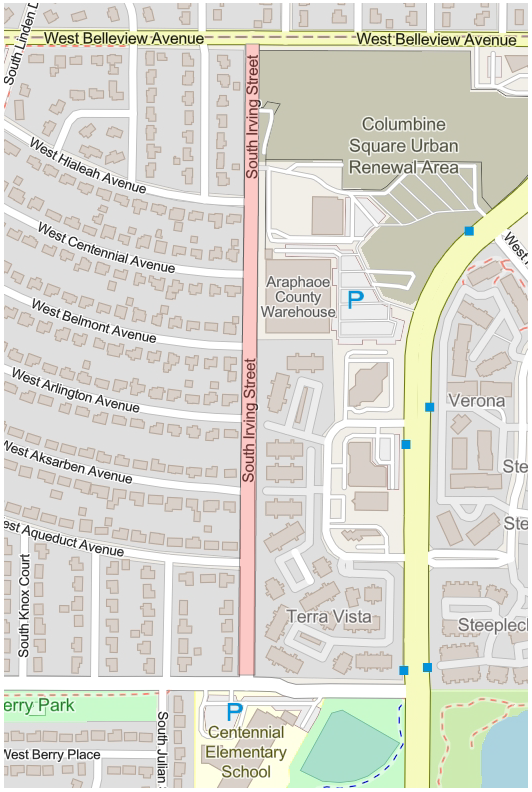
Irving St
Project Area Map
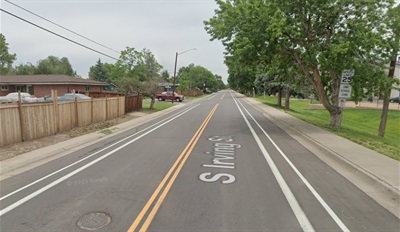
Existing Conditions
Data Summary
Street Type: Neighborhood Connector
Speed Limit: 25 MPH
Average Daily Traffic (ADT): 1,428
85th Percentile Speed: 37 MPH
Serious Injury and Fatal Crashes since 2022: 0
Planned Improvements
Upgrading to protected bike lane using “Zebra” lane separators and delineators and installing speed cushions for traffic calming.
Construction Timeline
Construction for this project will begin in Spring 2026.
Pennsylvania Street
Project Area Map

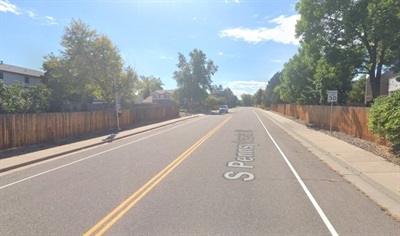
Existing Conditions
Data Summary
Street Type: Neighborhood Connector
Speed Limit: 30 MPH
Average Daily Traffic (ADT): 3,000
85th Percentile Speed: 24 MPH
Serious Injury and Fatal Crashes since 2022: 0
Planned Improvements
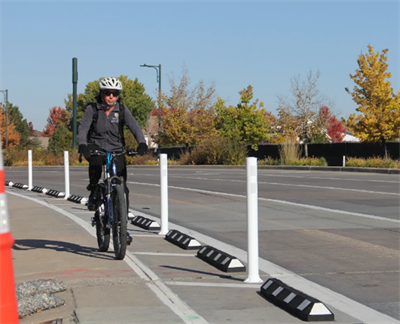
Upgrading to protected bike lane using rubber parking stops and delineators. On-street parking along Pennsylvania Street between Mineral Avenue and Nichols Drive will be removed to accommodate the protected bike lane. Field users are encouraged to use the available parking lots at Powell Middle School once this infrastructure is installed.
Example of the materials being used:
Construction Timeline
Construction for this project will begin in Spring 2026.
Windermere Street
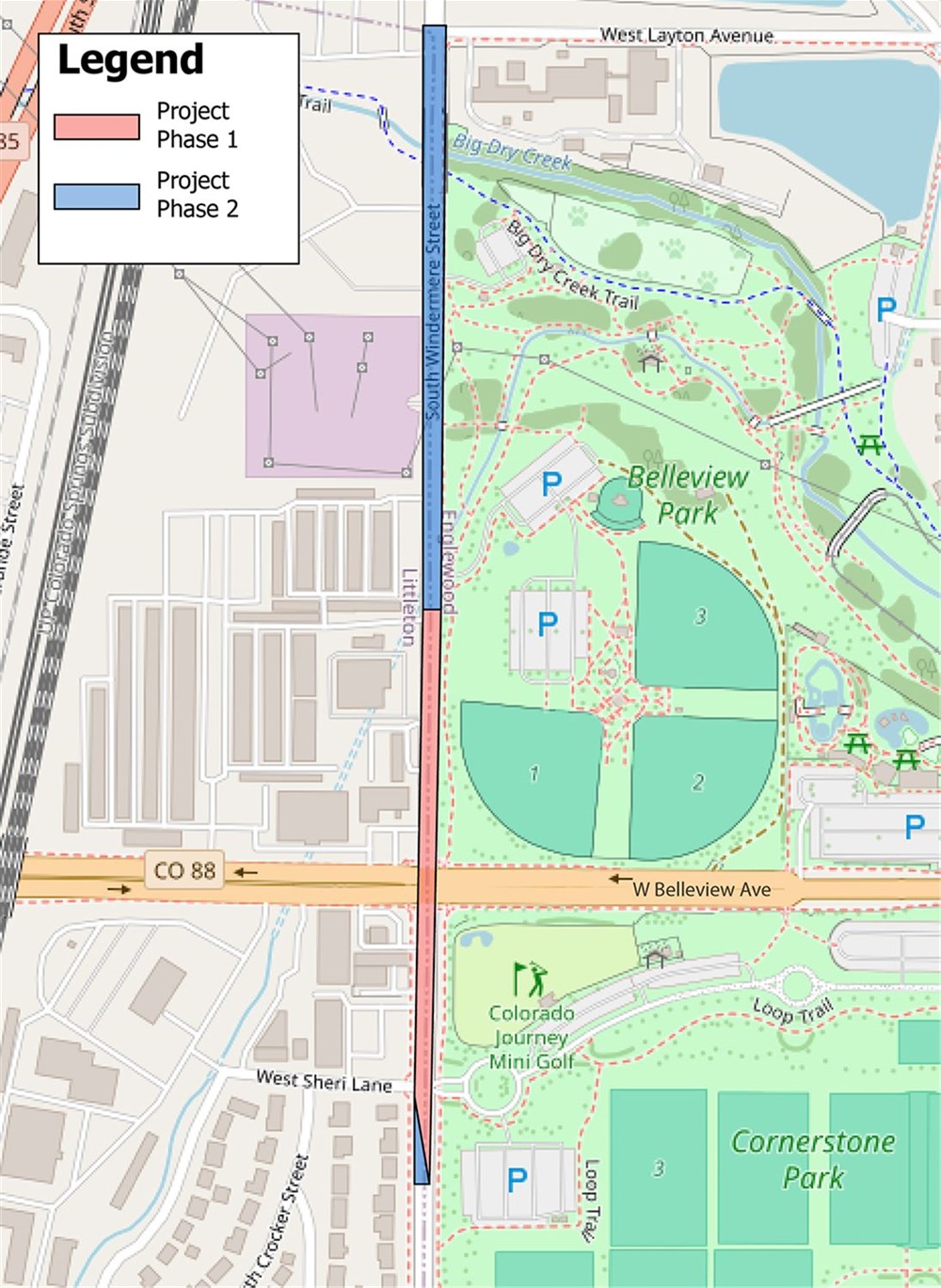
Project Area Map
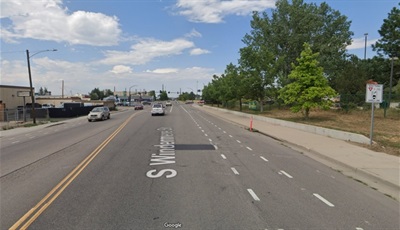
Existing Conditions
Data Summary
Street Type: Neighborhood Connector
Speed Limit: 30 MPH
Average Daily Traffic (ADT): 16,447
85th Percentile Speed: 34 MPH
Serious Injury and Fatal Crashes since 2020: 0
Planned Improvements
Upgrading to protected bike lane using lane separators along Windermere Street between Sheri Lane and Layton Avenue. Additionally, a protected bicycle intersection at Windermere Street and Belleview Avenue will be installed; protected intersections physically separate people walking, biking, and rolling from vehicles up to and through the intersection and make it easier for these travelers to see and be seen by drivers.
Example of the materials being used:

Construction Timeline
Construction for this project will begin in Spring 2026.
Installed Bicycle Network Projects
Belleview Avenue
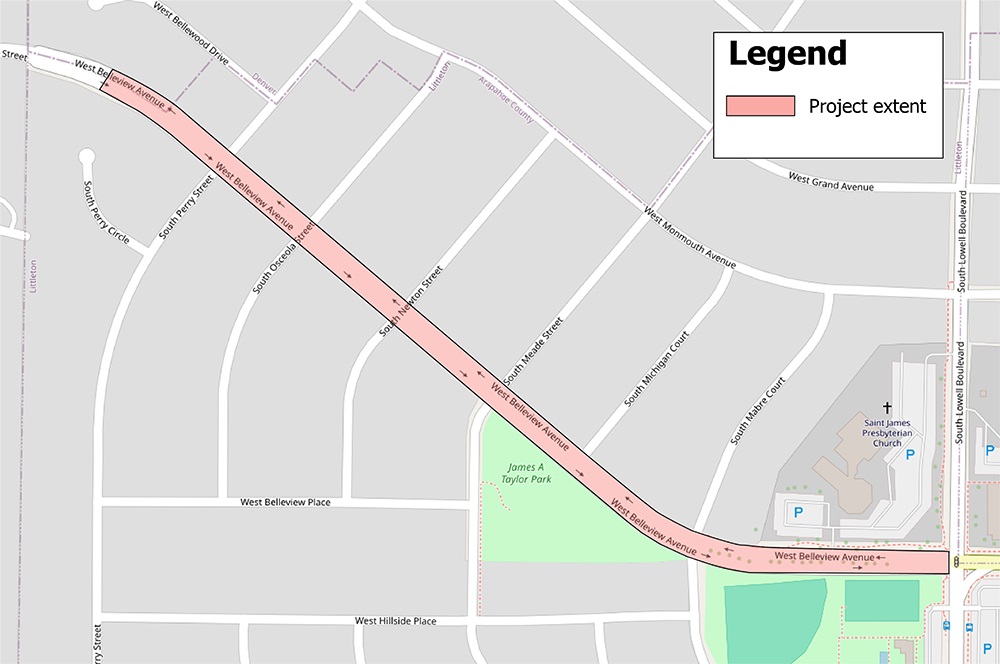
Project Area Map
Existing Conditions

Data Summary
Street Type: Neighborhood Connector
Speed Limit: 35 MPH
Average Daily Traffic (ADT): 15,400
85th Percentile Speed: 37 MPH
Serious Injury and Fatal Crashes since 2022: 2
Planned Improvements
Upgrading to protected bike lane using Orca Lane Separator.
Construction Timeline
Construction on this project was completed in September 2025.
Church Avenue
Project Area Map

Existing Conditions

Data Summary
Street Type: Mixed Use Downtown Connector
Speed Limit: 30 MPH
Average Daily Traffic (ADT): 4,307
85th Percentile Speed: 32 MPH
Serious Injury and Fatal Crashes since 2022: 7 (1 possible injury, 6 non-injury)
Planned Improvements
Upgrading to protected bike lane on the south side of Church Ave using “Safe-T Lane Dividers,” a precast concrete barrier.
Construction Timeline
This project was installed in early September 2025.
Phillips Avenue
Project Area Map

Existing Conditions

Data Summary
Street Type: Neighborhood Connector
Speed Limit: 30 MPH
Average Daily Traffic (ADT): 1,900
85th Percentile Speed: 25 MPH
Serious Injury and Fatal Crashes since 2022: 1
Planned Improvements
Upgrading to protected bike lane using "Zebra" lane separators and delineators. On-street parking along Phillips Avenue between Pennsylvania Street and Clarkson Street will be removed to accommodate the protected bike lane.
Construction Timeline
Construction on this project began in July 2025 and installation was completed by early August.
FAQs
Why was my street chosen for one of these projects?
The City selects locations for protected bike lanes based on a combination of factors, including the following:
- Speed and Traffic Data - Streets with high vehicle speeds or traffic volumes may be prioritized to improve safety.
Planned Roadway Improvements - Locations scheduled for repaving or restriping provide an opportunity to test safety enhancements efficiently.
- Crash History - Areas with a history of crashes, particularly those involving people walking and biking, may be chosen for safety interventions.
- Roadway and Land Use Context - Factors such as street width, number of lanes, nearby schools, parks, or businesses influence project selection.
- Community Feedback - Input from residents and stakeholders helps identify areas where safety concerns exist.
How long will construction last?
Because the City uses quick-install materials for these projects, construction is typically completed within a few days. Larger projects, such as those spanning an entire corridor, may take multiple weeks. However, timelines can vary depending on weather conditions. The City's goal is to minimize disruption while making safety improvements as efficiently as possible.
Why does the City not use concrete for these treatments?
The materials used to construct pilot projects are quick to install and moveable if we need to make revisions to the project design, all at a much lower cost than using concrete. These materials can be installed by City staff in a matter of days, as well as temporarily removed, if necessary, due to emergencies, heavy snow, or other conditions.
Just like a seamstress would use a lower cost fabric to test how the project fits and adjust as needed before investing in a more durable, high-quality fabric, the city is first using lower-cost, quick-to-install materials to test and refine the design and materials before seeking to make them permanent.
Which Wheels Go Where
Biking is a fantastic way to stay active and discover the beauty of our community. Whether you're enjoying Littleton's extensive network of trails or commuting around town, in Littleton, we prioritize the safety of everyone, however you choose to get around.
The last few years, communities across Colorado have seen an increase in electric micromobility — like e-bikes, e-scooters and e-skateboards — utilized to move around for both transportation and recreation. Electric micromobility, or e-micromobility, is powered by an electric motor and does not travel over 20 mph. They are swift, efficient and contribute to reducing our carbon footprint.
But do you know the difference between an e-bike and e-motorcycle? Did you know that any e-bike or e-scooter over 750 watts has a different classification, and different rules apply? Before you purchase an electric bike or scooter, use the guide below to know what you ride and where you ride.
Which Wheels Go Where
The use of e-bikes (Class 1-3) or electric motorcycles in certain locations throughout Littleton is strictly prohibited. Knowing where you're permitted to ride your e-bike or electric motorcycle is important.
Which Wheels Go Where
*Remember: E-bikes are never allowed where signage prohibits them.
Sidewalks, parks, and trails are shared spaces. Whether you're cruising to class or enjoying a weekend ride, being courteous to pedestrians and other users keeps everyone safe and shows respect for our community.
Know The Difference
An electric bicycle is a bicycle or tricycle that is equipped with fully operable pedals and an electric motor of less than 750 watts.
E-bikes are divided into three classes:
| Class |
Description |
Maximum Assisted Speed |
| Class 1 |
Motor assists only when pedaling. |
20 miles per hour |
| Class 2 |
Motor can propel the bike without pedaling up to 20 miles per hour. |
20 miles per hour |
| Class 3 |
Motor assists only when pedaling. |
28 miles per hour |
License, registration, and insurance are not required for operating an e-bike that meets the requirements of any of the above three classes.
If the device does not comply with those definitions and requirements, such as not having pedals or having a wheel that is less than sixteen inches in diameter, the device would either be a motorcycle or motor-driven cycle, depending on horsepower.
Ride Smart. Ride Respectfully.
- Be courteous and respectful to others on the road
- Treat pedestrians and fellow riders with consideration. Littleton is a shared space.
- Obey speed limits - riding any device that goes over 25 MPH? You shouldn’t be on the sidewalk.
- Ride the right direction - do not ride against traffic or on sidewalks in the opposite direction.
For more resources on biking in Colorado, visit: